DOYD’S JUICE FOR DETOX

Have you tried Detoxification?  Juicing for detox is a very effective way for me and my husband to cleanse our body.  Why do we do this?  Simple, because we love ourselves.  We enjoy juicing as a family, we have fun buying our produce from the local Farmer’s Market in Laguna Niguel, Irvine or San Juan Capistrano (California) and we spend time together in our kitchen cutting up, cleaning and preparing for our healthy juice for detox.

First thing’s first, we buy organic fruits and vegetables to make sure our juice is free from any pesticides or chemicals.  We make sure to pick the fruits and vegetables that our children like plus a little bit of this and that that they don’t know I mix into the juice but they still love the taste (i.e., celery, beets, ginger, lemon, different herbs, etc.).

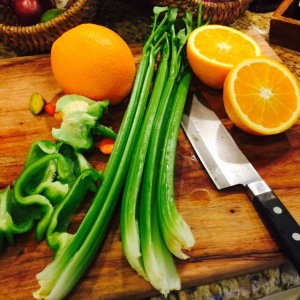
Today I went to Sprouts Farmer’s Market with my little girl and she helped me bag all the fresh ingredients for our juice.  Our children eat all kinds of vegetables and fruits so she picked the celery, cucumbers, green bell peppers and green apples.  Green is her favorite color 🙂 and I picked the rest.

Our photo gallery below shows all the ingredients.

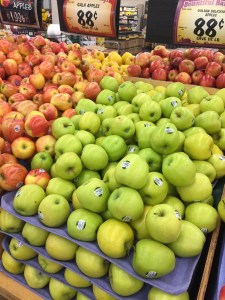
Apple is the most common ingredient we put in our juice
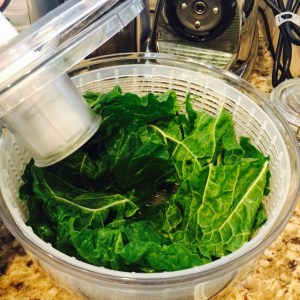
Collard greens in the salad bowl after a good wash
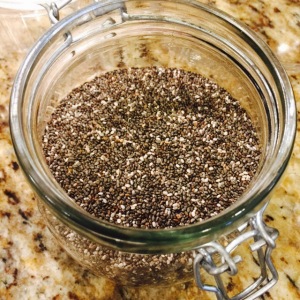
Chia seeds for added fiber
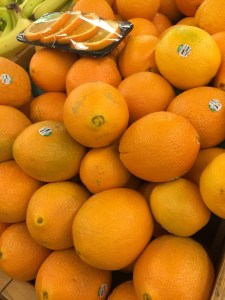
Navel oranges to add Vitamin C and sweetness into our juice
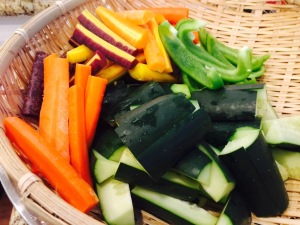
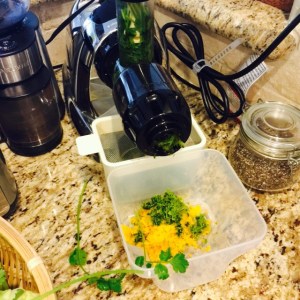
Washed and cleaned ready for chopping to fit our juicer
Sliced thinly to fit our juicer
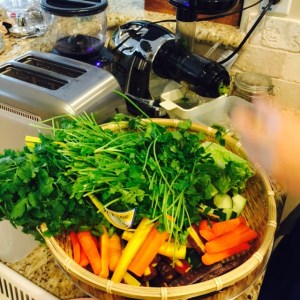
Lots of Parsley and Cilantro
More green means more detox power
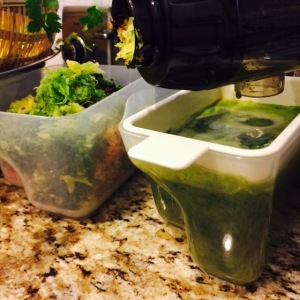
Using our Omega Nutrition Juicer
Fast absorption of powerful ingredients and antioxidants
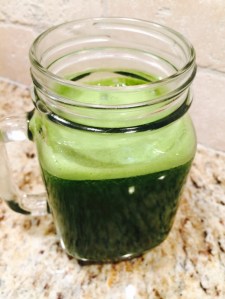
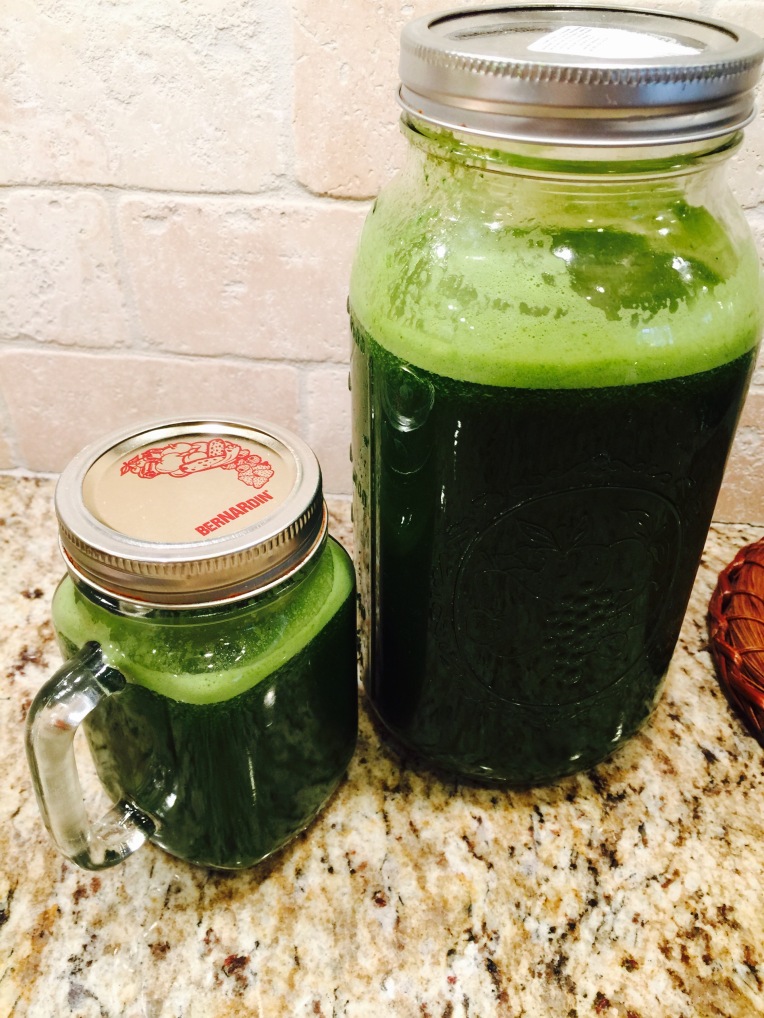
Detox Juice
Detox Juice

Juicing for Detox is really easy.  We are very lucky to have all these fresh vegetables available locally but really, wherever you are, there are all kinds of produce available to you.  Just pick anything that you want and juice them up.

Finding a good juicer is an investment for your health.  We use the Omega Nutrition System Juicer that use low-speed juicing.  There are a lot of juicers in the market.  Invest on one that is durable and something that will last for a long time.

Good luck on your juicing!

Watch Dr. Oz for more inspiring messages on Juicing for Detox:

Click this photo for a link to watch Dr. Oz on Joe Cross' 3-Day Weekend Juice Cleansing
Click this photo for a link to watch Dr. Oz on Joe Cross’ 3-Day Weekend Juice Cleansing

Watermelon Season is here!!!

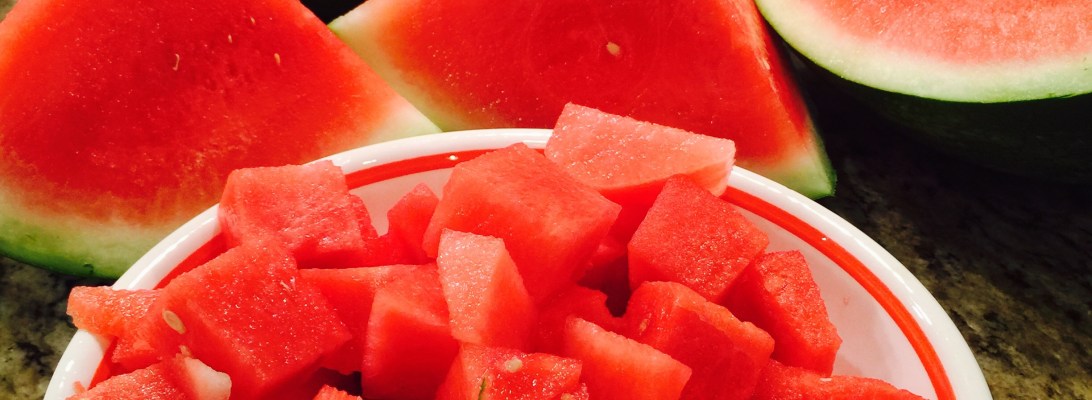
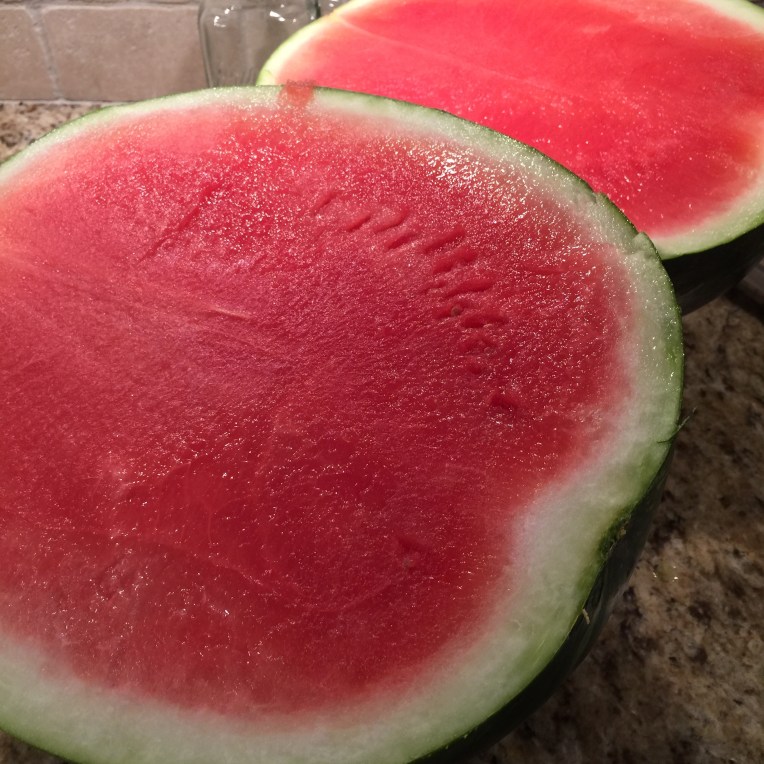
Red, juicy and sweet watermelon

Day after day, my family craves for some sweet and juicy watermelon.  
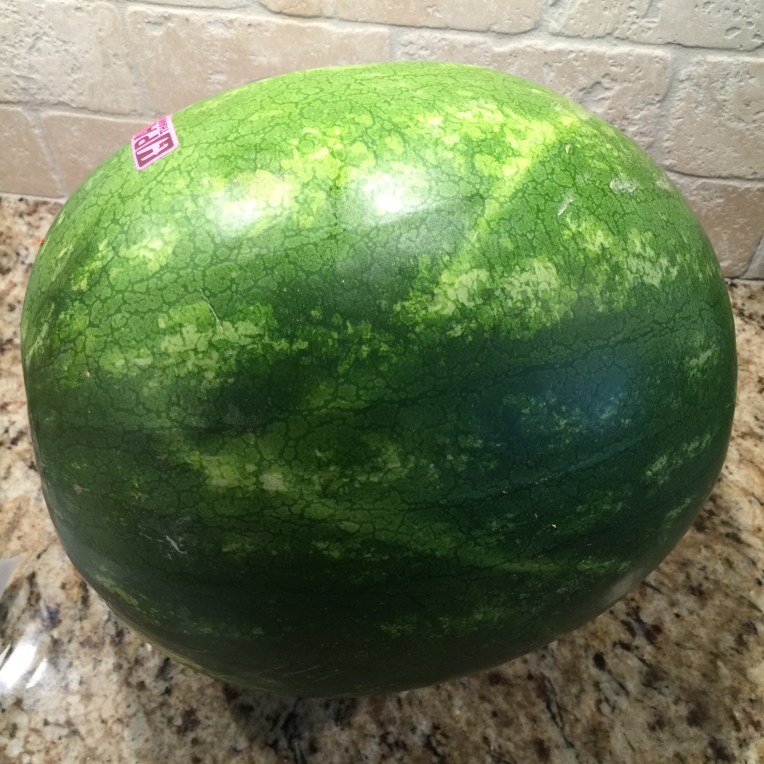
We’ve been buying watermelon for more than a week now.  Prices are going down and it is getting cheaper and cheaper, truly a bargain.  I just bought 2 whole seedless watermelons at Wholefoods Market today for $2.49 each.  

Filled with nutrients such as vitamin C and lycopene, our watermelon sure quenches our thirst and fills our hunger.  

Read more about the “Benefits of Watermelon” from the World’s Healthiest Food Website.

Go ahead and buy your watermelon today.  Summer is just around the corner so let’s enjoy what’s in season and buy them at a reasonable cost today!


Giant watermelon
 

Pinoy Streetfood: Nilagang Mani (Boiled Peanuts)

Nilagang Mani (Boiled peanuts) is a very economical snack available everywhere in the Philippines.  Memories of traveling by bus with my Mom going to Pangasinan or Baguio City.. Mommy buys me a bag of boiled peanuts and boiled eggs to snack on during the long road trip.

It’s very common to see street peddlers in Manila selling these boiled peanuts.  Sometimes, they come in pre-packed brown bags and peddlers would quickly load a tour bus to sell to travelers for their long bus ride to the provinces.

Recently, my husband and I bought a small pack of these boiled peanuts from an Asian store and knowing that my eldest daughter loves to eat this too, I was inspired to make some from my kitchen in order to save money, control the saltiness of the peanuts and add more seasoning to make the boiled peanuts more aromatic and flavorful.

Street peddler posted online by Richard Macalino

Here’s my very simple recipe:

Ingredients:

  • 2 lbs. raw Peanuts
  • 1/4 cup salt
  • 5 pods of Chinese Star Anise
  • 1 tbsp. Garlic powder

Cooking Procedure:

Wash raw peanuts well.  In a large stock pot, add raw peanuts and cover it with water or fill the pot until it’s about more than half way filled.  Add salt and start boiling.  When the water in on a rolling boil, add star anise and garlic powder.  You can add more or put less depending on your taste.  Continue to boil covered for 2 hours.

Turn off the heat after 2 hours and leave the peanuts to cool down with the salted water.

After 3-5 hours, drain and your boiled peanuts are ready!  Enjoy!

It’s truly a healthy and fun snack for the whole family.  Making a big batch is a good idea.  It holds well in the refrigerator for 2-3 days, even up to 5 days.  You will find boiled peanuts from Asian markets but I think it’s more fun to just make some at home.

Raw peanuts soaked in water with salt ready for boiling
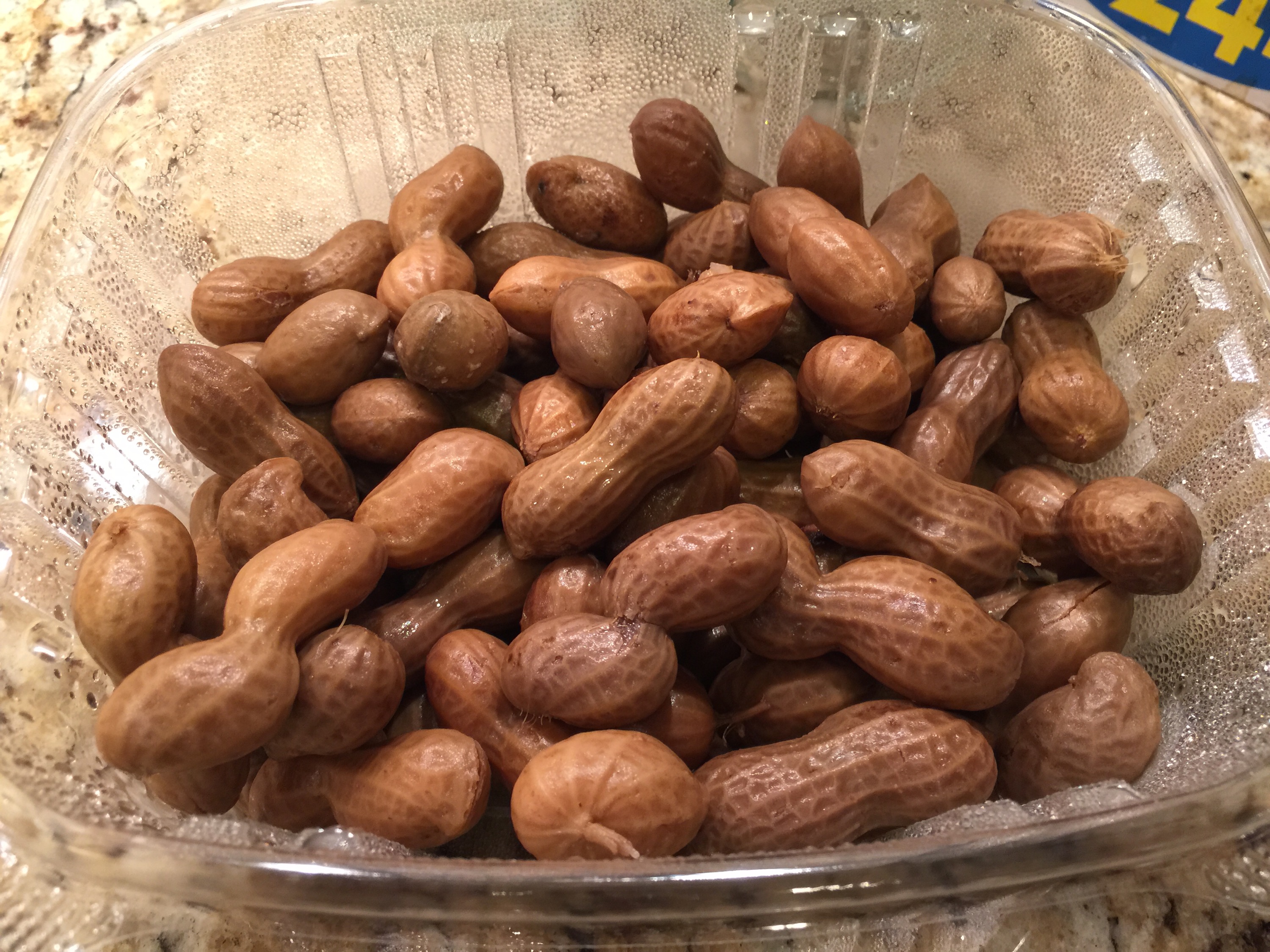
Healthy boiled peanuts great for snacking

NOTES:

Growing Sprouts with my Kids

Growing my own sprouts was an idea I learned from my brother.  I researched about it and how beneficial and healthful it will be for me and my family.

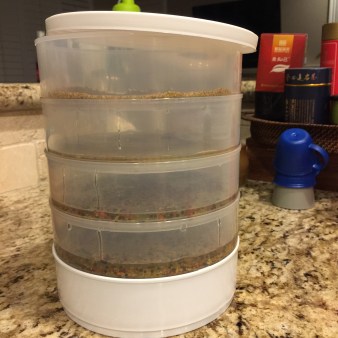
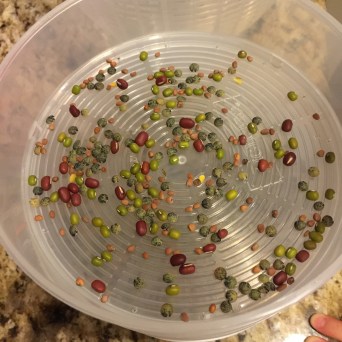
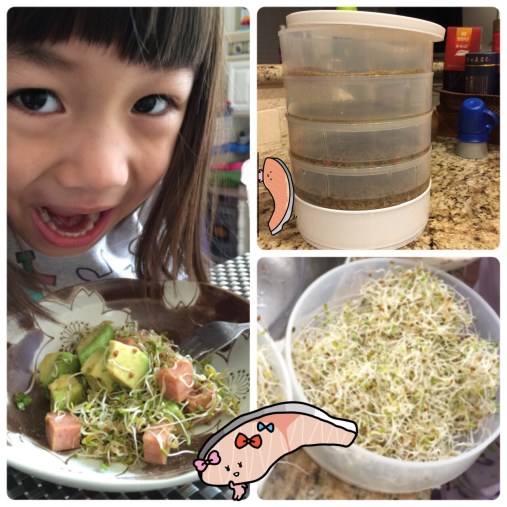
I invested on a Victorio 4-Tray Seed Sprouter, I read the manual, watched YouTube tutorials and with my daughters, we enjoyed germinating and growing our sprouts.


Our first harvest proved really effective.  The best discovery I had was that our girls love to eat them.  Growing sprouts being easy and money-saving plus fun simply makes it a worthwhile experience we will be doing from now on.

The next challenge was how do I make my children eat these.  We are not vegetarians but our children adapts well to new tastes and textures.  How do I make them eat it?  First I let them try a little piece of what they planted on their own.  That makes it more meaningful for them.  Then I prepare, cook or mix the sprouts with their favorite recipes like plain micro-greens mixed with their favorite soy dressing (see Mei’s cute YouTube video on top of this page),  add it to my daughter’s sandwich for school lunch or make our children’s favorite:  Vegetable Pancake made of sprouts and a lot of other simple dishes I am sure they will love.

I can’t wait to learn to grow sprouts from a Jar.  That will come next on my blog.


Fresh Kale, Roasted Chickpea & Apple Avocado Salad

This fresh salad made of Tri-color Quinoa (from Trader Joes) is a very easy, healthy and filling recipe.  I learned about this recipe from an online nutrition educator.  I made changes to her recipe according to what ingredients I have at hand.  Here’s how to make this:

INGREDIENTS:

1 cup of Tri-color Quinoa

2 cups Water

1 bundle of Kale, washed and removed tough parts of stalk

1/2 cup Sun-dried Tomatoes, sliced

1-2 Avocados, diced

1 small Fuji apple, diced (korean pear or plums could be used too)

1 medium Red Onions, diced

1 can Chickpeas/Garbanzo Beans

4 Tbsp. Balsamic Vinegar

1/2 large Lemon

Salt

Cook the quinoa according to package instructions.  Set aside and let it cool.

In a large bowl, mix the washed and cut Kale with some salt and balsamic vinegar.  Massage, squeeze and/or kneed for 2-3 minutes until the leaves are soft and had turn to dark green.

Heat a non-stick frying pan to medium, then add a little bit of olive oil.  Saute the red onions until half translucent, then add the chickpeas and sun-dried tomatoes.  Salt to taste.

Together with the Kale in a bowl, mix the sautéed ingredients with the quinoa plus add the diced apple, avocado and lemon juice then mix well.  Serve as is or top with some fried tofu, grilled fish or fried eggs.

Very easy and so refreshing to eat.

Massaman Tofu Curry with eggplants and mushroom (แกงมัสมั่น)

Enjoying the rich flavor of curry is like diving into the enticing food culture of the East. The depth of flavor, the goodness of the combination of different spices and the bright color is simply appetizing.

I used to not like curry at all.  I didn’t like the boring flavor I get from the kind I ate when I was young because I only knew one kind of curry then and it wasn’t the kind of curry I now know of.  I’ve tasted chicken curry of many sorts but by the looks of it, it was as simple as adding instant curry powder to cut-up chicken, mixing coconut milk, potatoes, carrots and a few other variety of extenders.

This recipe I am sharing was inspired by my brother who loves to create his own vegan cuisine in his healthy kitchen.  He always gives me ideas on how to cook vegetarian dishes.  This version is a twist of my own taste and choice of ingredients.

I hope you like it!

Ingredients:

  • Block of firm organic tofu, cut into 1″ cubes
  • 270 ml. of Light coconut cream
  • 3 pcs. Indian eggplant, washed and sliced in chunks
  • 2 tbsp. Massaman curry paste
  • 1 Zucchini, washed and sliced half-moon
  • 1 can Black beans, washed and drained
  • 1 Shallots
  • 1 bunch Spinach with stems, washed and drained
  • 1 cup Mushrooms, sliced in half
  • Olive oil
  • Salt and pepper

In a shallow pan, heat olive oil on medium high then sauté the curry paste and shallots.  Add the tofu, mushrooms and zucchini and continue cooking for a minute or two.  Stir in the coconut cream then add 1/2 cup to 1 cup of water (depending on consistency desired).  Cover the pan and cook until the veggies are almost cooked.  Add the eggplants, spinach and beans then season with salt and pepper.  Close the lid and let everything cook according to how you want it done.


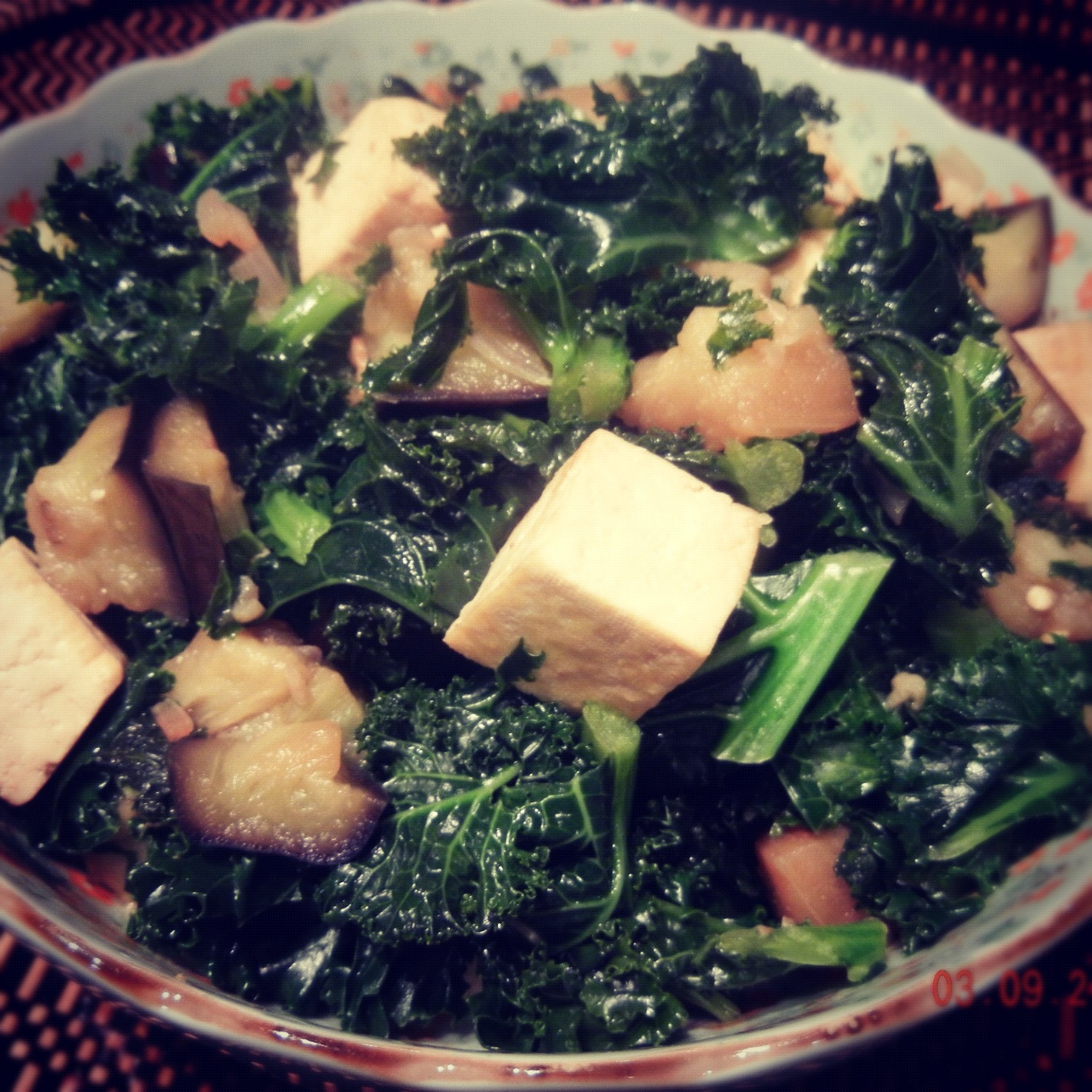
Kale Stir-Fry

I first learned about Kale when I was reading recipes for baby food back in 2004 when our eldest daughter was still a baby.  It was intimidating at first because I never used or tasted this type of vegetable which was not available at the local markets when I was growing up in Manila.  That’s why in my many years of learning to cook, I barely had any interest with Kale.

Making baby food out of Kale was challenging.  At first, we thought the kids will not like it but actually, they did!  They really did and it was their favorite homemade baby food and since our children like it so much, we should learn to eat it too.  This is the start of my Kale challenge:

Here’s an easy recipe that’s not only appealing to the taste, but also appetizing to the eyes.

Ingredients:

1 Block firm tofu

1 lb. Kale

1/2 Large eggplant (North American Variety)

1/4 cup Low sodium vegetable stock

Sliced garlic

Olive oil

Chili pepper flakes

Salt and Pepper

Heat olive oil on medium low heat.  Sauté garlic with a dash of salt until light brown and crispy.  Add chili pepper flakes.  Add a little more olive oil then cook the eggplant and tofu.  Stir in the vegetable stock then turn up the heat to medium high.  Lastly, add the kale and cook for a few minutes until cooked to desired texture.  Salt and pepper to taste.


Related Articles:

The Truth about Kale

The World’s Healthiest Foods dot ORG


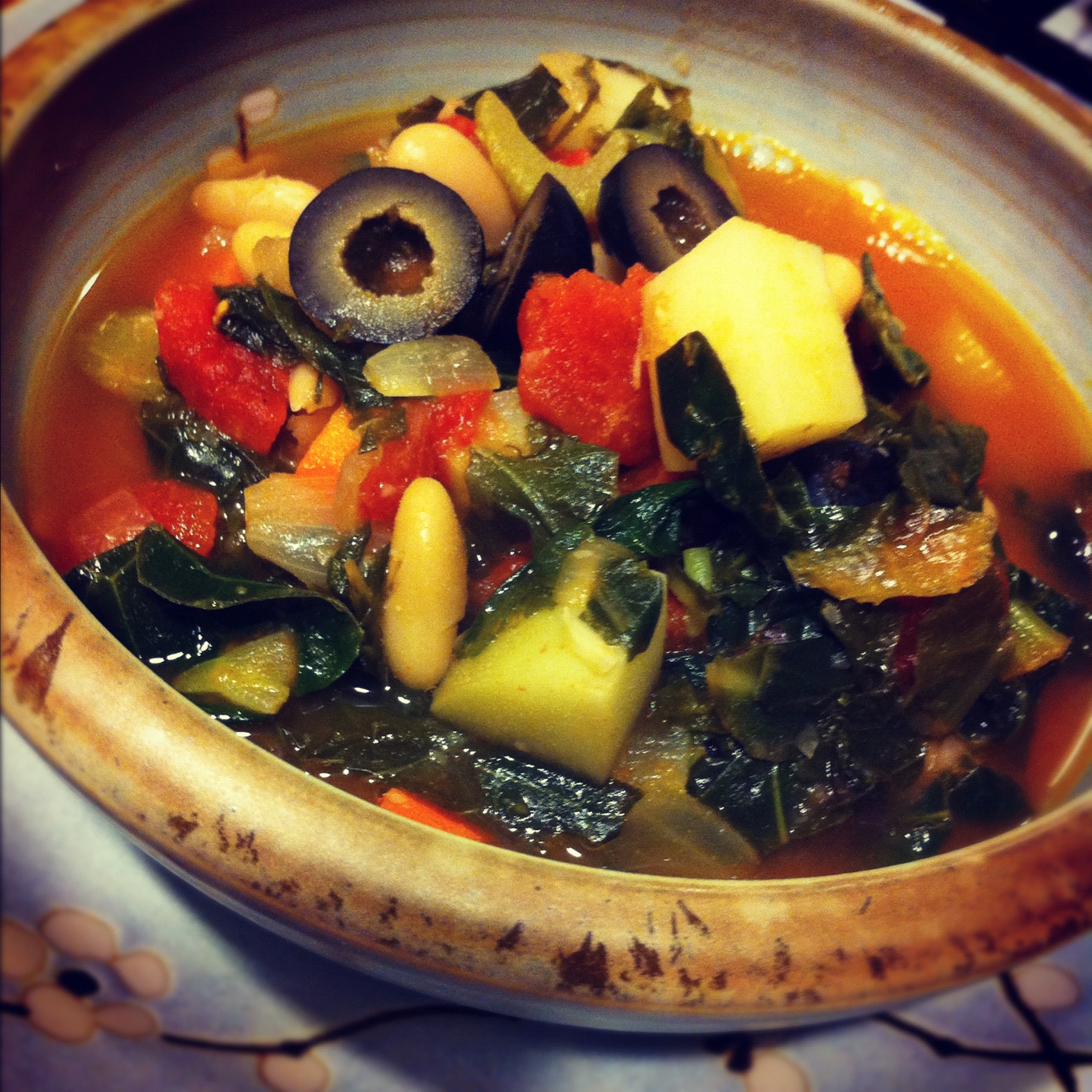
Vegetable Minestrone

I have this feeling that this Vegetable Minestrone will not be a sellout at home because my family is not into eating over-cooked veggies like the mixed greens I put in this soup. Let’s see what they have to say.


Anyway, it’s tough learning about cooking healthful options for our family’s menu but I am trying my best to change our eating habits. Hard as I thought, it was difficult to throw away almost all the processed food from our pantry but after slowly changing our supply with only the fresh, wholefood and necessary – I feel more challenged as the mother and the “cook”.

I am responsible for what my family eats. Eat healthy and enjoy!

Ingredients:

  • 1 Tbsp olive oil
  • 1 Brown onion, chopped
  • 1 Large carrot, peeled and diced
  • 4 Celery stalks, chopped
  • 5 Cloves of garlic, minced
  • 1 Lb. of Swiss chard or Kale, coarsely chopped (I used mixed greens on this recipe)
  • 1 Medium Potato, peeled and cubed
  • 15 Ounces of canned diced tomatoes (unsalted)
  • 1 Fresh rosemary sprig
  • 1 Piece of parmesan cheese rind
  • 2 Cans (14-ounce) Low-sodium beef broth or vegetable broth
  • 1 Can cannellini beans, drained and rinsed
  • 1 Can black whole olives, drained and roughly chopped
  • 2 Tbsp of chopped flat-leaf parsley
  • Salt and Pepper

Heat the olive oil in a heavy large pot over medium heat. Add garlic, onions, carrots and celery. Saute until the onion is translucent. After a few minutes, add the potato and the greens. Saute for a few minutes then add the canned tomatoes and the rosemary. Simmer until the greens are wilted, about 10 minutes.

Meanwhile, blend 1/2 of the beans with 1/4 cup of the beef or vegetable broth until smooth. Add the pureed bean mixture, remaining of the broth and the parmesan cheese rind into the pot of vegetable mixture. Simmer and stir occasionally, about 10-12 minutes. Stir in the rest of the cannellini beans, olives and parsley. Simmer until the beans and olives are heated through. Season with salt and pepper, according to taste.

Jade’s score: 9.8 (out of 10) 🙂

Homemade Kimch’i (김치)

Untitled

This is one of my favorite recipes and I’ve been saving to write about this on a special day like today.  But before I start, I want to thank Maangchi, my favorite cooking mentor for teaching me how to make this.

Not all people like Kimchi because of the strong sour smell.  I cannot blame them but a lot of other people (like me) love that smell anyway.  Years before, I honestly did not mind about what Kimchi is all about but when I started reading about Korean dishes, I became curious.

I first tried Kimchi at Korean restaurants as a side-dish.  It was appetizing to me because of the savory kick of spicy and sour sauce.  Then slowly, I appreciated the taste of the sauce and my palate started to want for more.

I only like the ones from the restaurant because it tastes more fresh.  I never had a store-bought Kimchi in our home and because of that, I realized I had to learn to make my own Kimchi 🙂  To me, it’s comforting to know what ingredients I have used on my recipes.  Then I am more confident serving food to my family knowing that they are eating homemade dishes by me.

I hope you enjoy learning this recipe as much as I did.  I will make a new batch this weekend 🙂

INGREDIENTS:

  • 2 medium Napa Cabbages
  • 2 medium Korean Radishes (Daikon), cut into 1 inch cubes (leave some for the porridge, julienned)
  • Sea Salt
  • 1 big Onion
  • Ginger
  • 10-15 pieces of Garlic (I like to use a lot!)
  • Green Onions
  • Asian Chives
  • Hot Pepper Powder (pick a nice one that’s bright red)
  • Fish Sauce
  • Sweet Rice Powder

Untitled

Cut the cabbages in half, then slit each half through the core, but NOT through the rest of the leaves.  Soak each piece in cold water and liberally sprinkle some salt (about 3/4 cup of Sea Salt per medium cabbage), then set aside for 2 hours.

Untitled

Salt the diced radishes too and leave for 2 hours as well.  After 2 hours, turn the pieces of cabbage and radishes over so they are salted evenly. Leave for another 2 hours (Total of 4 hours of salting).

Prepare the porridge.  Put 1/2 cup sweet rice powder and 3 cups of water in a sauce pan and cook over medium high heat while stirring constantly.  Add 1/4 cup sugar then cool it down.  After 4 hours, wash the cabbages and radishes in a cold tub of water… wash 3-4 times making sure you soak it well in water to REMOVE ALL the salt.

Untitled

To the porridge, add 1 cup good quality fish sauce, 2-6 cups of hot pepper flakes (depending on your taste), 1 cup of crushed garlic, 1-3 tbsp. of minced ginger, 1 large minced onion. (I use my food processor to mince and crush the ingredients on this part)

Untitled

Untitled
Mix the porridge and continue washing the cabbages and radishes.

Take a look at my photos and see how I soak the cabbages in water to make sure all the salt is removed.

Untitled

Prepare the following:

  • 7-12 diagonally sliced green onions
  • 2 cups asian chives cut into 2 inches in length
  • 2 cups of shredded korean radish (left-over from the cubes that you used before)

Combine the porridge and the ingredients above.

Untitled

Untitled

Untitled

Make sure the water from the cabbages drip off before starting to spread the paste on the leaves.  You will see on my slideshow how my paste looks like (it will make you salivate if you love Kimchi like me – LOL!)

Start spreading the paste on the leaves and leave some paste for your cubed radishes (Kaktugi).  Put your homemade Kimchi into an air-tight sealed container or glass jar.

Untitled

Untitled

Make sure you use a clean spoon each time you get a portion of your Kimchi when you eat. Also, press down on your Kimchi after getting your serving to make sure there is no air in between your cabbages. Eat this fresh or wait until it’s bubbly and fermented.

Put the Kimchi container at room temperature for a day then keep it in the refrigerator after the first day of fermentation. In a few days, you will see some bubbles and you will start smelling the sour Kimchi. That means it’s ready being fermented.

Enjoy your Kimchi!!!!


Related Articles:

MAANGCHI where I learned how to make Kimchi