
I go to my favorite Japanese stores…
You can’t tell if I am in Japan or California.


I go to my favorite Japanese stores…
You can’t tell if I am in Japan or California.
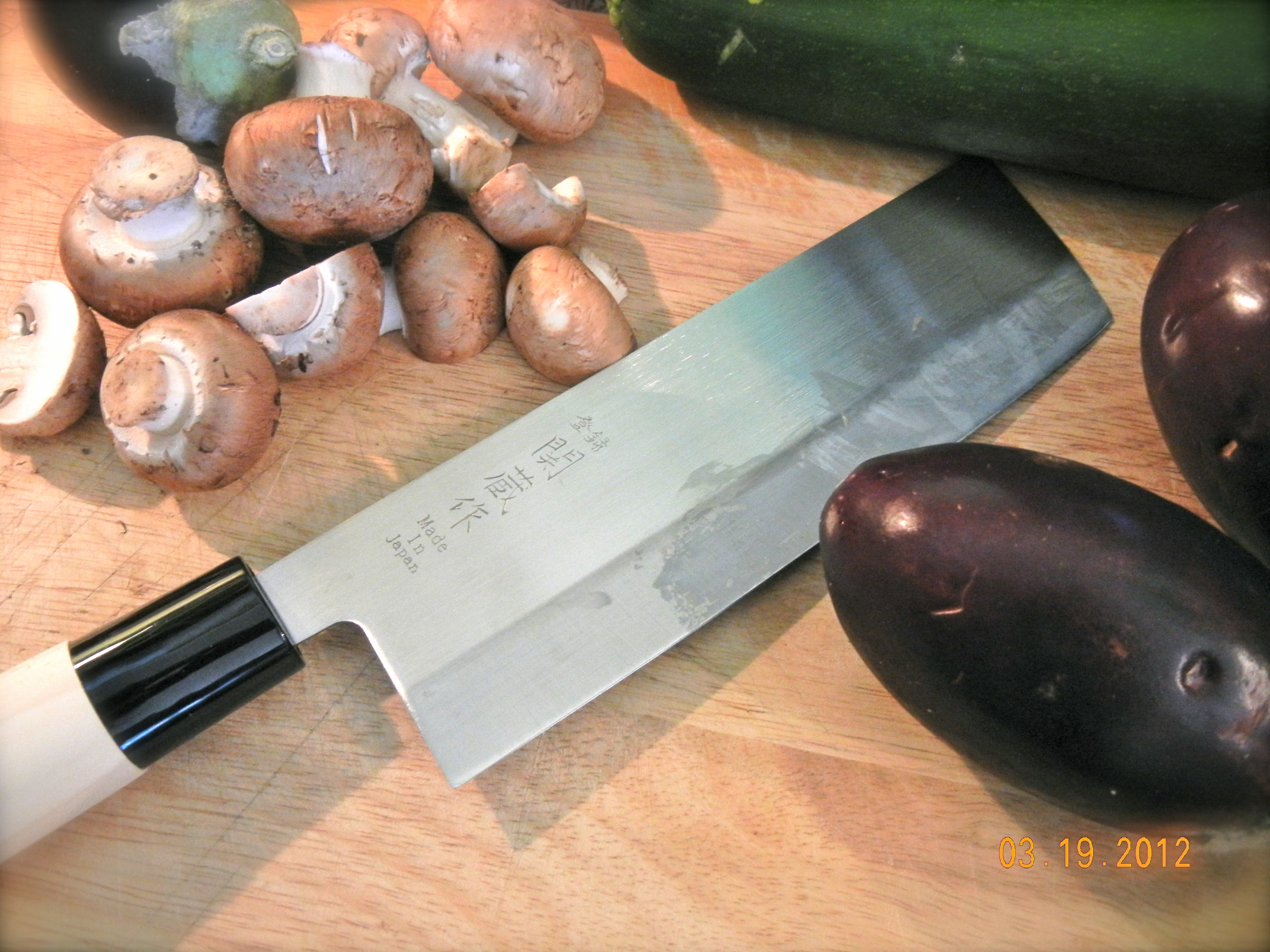
To me, what’s more important when cooking are not just the ingredients nor the pots but the knives I use to carefully and craftily carve, chop, slice, dice, mince and cut my fresh ingredients. I’ve been wanting to have one of these traditional Japanese vegetable knife to partner with my ceramic santoku but I couldn’t find one at the local stores except online. I wanted to hold and feel the knife before purchasing it because it’s critical for me to hold and feel the grip and weight of the knife before I actually use it in my kitchen.
One can read more about the history of this oldest kitchen knife from Japan from lots of resources online. I have compiled a couple of sites I have visited myself and I am truly awed by the beauty of this hand-crafted tool. Precision is the key…. I love my Santoku and my new Nakiri-Bocho knives 🙂
Someday, I want to have my own authentic hand-crafted Japanese forged knives straight from Japan.
Related Articles:
Purchase Nakiri-Bocho here
Nakiri-bocho on Wikipedia
Vodpod videos no longer available.
I wish I can make this everyday but I feel like it’s too much work even if it’s really simple. Making a warm bowl of miso ramen is a lot of work for me just like many of my other favorite japanese food. Because of it’s precision process, sometimes having a bowl of this from a small authentic jap restaurant is better than making your own. Here, I will share how I made this beautiful work of art so you can try your own version too.
INGREDIENTS:
METHOD:
Bring water to boil with the cleaned whole piece of pork. Let it simmer for a while then remove the pork and skim remaining stock. Add in the miso paste, hondashi, eggs and sesame seeds. Bring the soup base to boil. Add in the chili oil and light soy sauce to taste (optional). Blanch the fresh noodles in a pot of boiling water until they are cooked. Rinse with cold water, drain and set aside. I rub the noodles with a little bit if vegetable oil to keep it moist. In a serving bowl, add the noodles then top with the hard-boiled egg, sliced pork, narutomaki, corn kernels and chopped green onions. Pour the miso soup base into the bowl and add the roasted seaweed to top then serve immediately. Look at my photo gallery to be inspired and get hungry!
Note: I added preserved bamboo shoots to my soup because my favorite bowl of ramen from a japanese ramen restaurant serves theirs with some.
 DOYDY.COM