Dance of the Irish

Vodpod videos no longer available.

more about “Dance of the Irish“, posted with vodpod


A break from cooking and photography. 

I love listening to my short video collection of Jade’s music.  She works so hard on each song and we are simply proud of her.  

Enjoy this song.  It’s called “Dance of the Irish” and for her age and level, this is a difficult song but she pulled-it-off well. 

Good job Jade! …. and a pretty smile too 🙂 

Make a Bento Box

I am crazy for Bento and my dream is to become a  Bento Chef 🙂  Is there such a person? 

To prepare a bento box,  first of all, even before you start being creative, you need to have the money to buy all these tiny things to make your bento look really cute.  I love purchasing small bento accessories.  I buy only the best ones I like and keep them for future use.  These accessories are quite pricey considering that most of them are disposable so if you are practical, try to reuse these super cute bento accessories.  I am into knick knacks when it comes to cooking and I adore the colorful creations seen at Japanese Bento books.  When I see the photos of wonderfully made bento boxes, I always wish I could make that too.

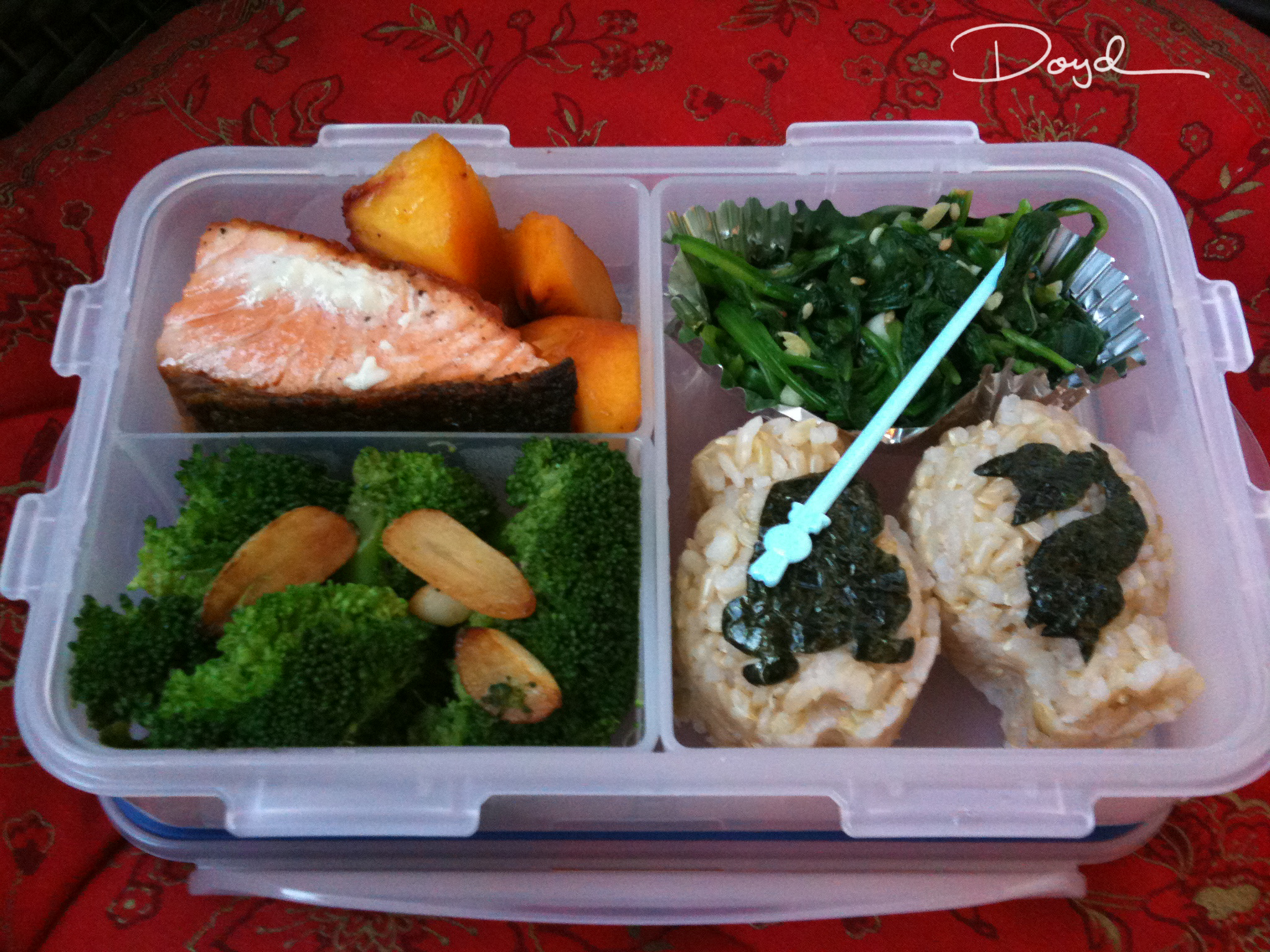
Here, I created a simple bento box for lunch.  What’s included?

  1. Pan Fried Alaskan Salmon fillet
  2. Brown rice with pre-cut sea weed topping
  3. Seasoned blanched Broccoli
  4. Seasoned Spinach
  5. Fresh-cut Nectarines

Here’s how I made it:

For the Salmon, I just seasoned the salmon with salt and pepper then pan-fried with Olive Oil, about 5-8 minutes per side on Medium high until the skin is crispy.

For the Broccoli, boil water into a tiny pot or saucepan and season with salt.  Blanch the broccoli for a minute then drain and quickly rinse under cold water.  Using the same saucepan, brown some garlic on olive oil then add the blanched broccoli.  Season with a mixture of light soy sauce, a dash of sugar and some cooking sake.

For the Spinach, boil water into a tiny pot and season with salt.  Blanch 1 bunch of spinach then wash in cold water, drain and squeeze off the excess liquid.  Randomly chop to create bite sizes of the spinach.   Season with minced fresh garlic, light soy sauce, dash of sugar, tiny drop of sesame oil and a few pinches of sesame seed.

For the Brown Rice, cook it accordingly.  You can use left-over rice that you have in your fridge.   I just used my sushi mold to shape the rice like so (see photo) then topped it with a pre-cut seasoned laver (sea weed). 

For the Nectarine, cut into bite sizes and add into the bento.

I try my best to keep my seasoning at its minimum to make sure my cooking will taste as natural as it is. 

If you have some quick bento recipes to share, please do share to me 🙂

Jajangmyeon (Korean Black Bean Paste Noodle)

Have you ever tasted that interesting instant noodle sold in Asian markets called “Chapagetti?”  The first time I tried it, it was a bizarre experience for me.  But then, after realizing what it is made of, I wanted to know where they derived this instant noodle from.

The name Chapagetti as I’ve discovered it, is the combination of Chajang (black bean fried sauce) and Spaghetti.  A lot of kids like this and so does my precious one.  To them, it is like the asian version of the Italian Spaghetti.  So, since my daughter wanted to eat this, I needed to learn how to make the real one so we will not rely on buying instant versions of this at the market.  Jajangmyeon (자장면) as they call it in Korean is the recipe I was looking for.

Here’s how I made mine:

INGREDIENTS

  • Pork Belly cut into 1cm. cubes
  • 1 Large Onion
  • 1 Large Sweet Potato
  • 1 Small Korean Zucchini
  • 1 Small Korean Radish
  • Black Bean Paste
  • Sesame Oil
  • Cucumber (for garnish)
  • White wheat flour noodles (sutamyeon)

In a small saucepan, heat 1 tsp. of olive oil.  Saute 6-8 tbsp. of Black Bean paste for 1 minute.  Set aside.

Using a wok, stir fry the pork belly with a little bit of olive oil.  Let it  cook until medium crispy.  Set aside.

Cut the Radish, Onion, Sweet Potato and Zucchini into bite size cubes.   Using the same wok, saute the radish and sweet potato.   After a minute or two, add in the onions and zucchini and saute for another minute.  Add 3 cups of water into the wok.  Cover the wok with a lid and let it cook for 10-15 minutes on medium high heat.

Add the fried black bean paste and mix well.  While boiling, add some cornstarch (or potato starch) and water mixture to make the sauce a thick consistency.  Add in a little bit of sugar (1 tbsp.)   DO NOT add salt for the chunjang is already salty.  Serve the sauce over hot noodles and garnish with thinly sliced cucumber.

Note:  Cook the sutamyeon according to package instructions.  It will depend on what kind of noodles you get from your local market.  Do not overcook or else it will be too mushy.

By the way, when you serve this, please note that the sauce and the noodles are heavy on the stomach so take it easy when plating 🙂  ENJOY!!

Samgyetang (Korean/Chinese) Ginseng Chicken Soup

Samgyetang (Ginseng Chicken Soup)_4604902853_l

I’m sure most of you will like this recipe because it’s one of the easiest, nutritious and delicious soup of all time.

I consider this as one of our family’s comfort-soup aside from our classic Sinigang and Tinola.

This soup is made with Ginseng or other Traditional Vegetable Root Tea available in your Asian Market. It is believed by a lot of Asians to help cure and prevent ailments.

If and only “IF” your closest Asian Market do not have fresh or dehydrated ginseng, you can also use a couple of pure ginseng tea bags as a replacement.

Here’s how to make Korean/Chinese Ginseng Chicken Soup:

INGREDIENTS:

1 Whole medium size Chicken (or large cornish hen)

2 Stalks of Green Onion

1/4 cup of Garlic Cloves

1/3 cup of Glutinous Rice

7-10 pieces of Red Dates (Jujube)

Ginger

Ginseng (Fresh or Dehydrated)

5 pieces of Chestnuts

Cold Water

Salt and Pepper (optional)

Prepare all ingredients. Soak Glutinous Rice for 5 hours or overnight.

Wash your chicken and remove any excess fatty skin. Stuff the cavity of the chicken with the soaked glutinous rice, some garlic, half of the dates and chestnuts and some ginseng. Don’t forget to crush the ginger and add it as well.

Close the opening of the chicken with toothpicks. If you don’t have toothpicks, you can keep it open but place the chicken in a big pot carefully. Put in the extra garlic, ginseng, dates and chestnuts with the whole chicken then pour water enough to cover all the ingredients.

Start to boil for 20 minutes with a foil on top of the pot to cover. When boiling, make sure to remove all the scum to keep the soup clean and clear. Add more water if necessary. When it boils back, cover again with foil then simmer the soup for another 40 minutes to an hour on medium to medium high heat (depending on the kind of pot you’re using).

Before serving, you may add some freshly ground pepper and sea salt and some minced green onion.

Enjoy each slurp of this nutritious soup and each bite of the ginseng, dates, chestnuts, and tender young chicken. I love to eat the garlic on this soup because it melts in your mouth 🙂

If you have questions, feel free to comment and I will be glad to help answer your question/s so you can make your own version of this recipe.

Thanks for reading!!!

Dad and Mom’s Altar


mom’s altar

Originally uploaded by doyd74


Took this photo last Christmas day (2009) at my parent-in-law’s home in San Juan Manila. We stayed there for a couple of days and it was always refreshing to offer a prayer and visit their prayer room. 

Since the beginning of my marriage, I have learned a lot of simple Buddha teachings from my mother-in-law and it has provide my heart with more space to love others, not just myself and my family.

Makes me hungry

I saw this picture in my mobile phone’s photo gallery. We had this two Sundays ago after getting fresh produce and meats from the market. Doesn’t it make you hungry too?

I’ll be cooking pasta tonight so I have to start shredding this photo from my craving thoughts!!! 😦

There’s always another market day and I will look forward to this with a glass to chilled wine.

Homemade Kimch’i (김치)

Untitled

This is one of my favorite recipes and I’ve been saving to write about this on a special day like today.  But before I start, I want to thank Maangchi, my favorite cooking mentor for teaching me how to make this.

Not all people like Kimchi because of the strong sour smell.  I cannot blame them but a lot of other people (like me) love that smell anyway.  Years before, I honestly did not mind about what Kimchi is all about but when I started reading about Korean dishes, I became curious.

I first tried Kimchi at Korean restaurants as a side-dish.  It was appetizing to me because of the savory kick of spicy and sour sauce.  Then slowly, I appreciated the taste of the sauce and my palate started to want for more.

I only like the ones from the restaurant because it tastes more fresh.  I never had a store-bought Kimchi in our home and because of that, I realized I had to learn to make my own Kimchi 🙂  To me, it’s comforting to know what ingredients I have used on my recipes.  Then I am more confident serving food to my family knowing that they are eating homemade dishes by me.

I hope you enjoy learning this recipe as much as I did.  I will make a new batch this weekend 🙂

INGREDIENTS:

  • 2 medium Napa Cabbages
  • 2 medium Korean Radishes (Daikon), cut into 1 inch cubes (leave some for the porridge, julienned)
  • Sea Salt
  • 1 big Onion
  • Ginger
  • 10-15 pieces of Garlic (I like to use a lot!)
  • Green Onions
  • Asian Chives
  • Hot Pepper Powder (pick a nice one that’s bright red)
  • Fish Sauce
  • Sweet Rice Powder

Untitled

Cut the cabbages in half, then slit each half through the core, but NOT through the rest of the leaves.  Soak each piece in cold water and liberally sprinkle some salt (about 3/4 cup of Sea Salt per medium cabbage), then set aside for 2 hours.

Untitled

Salt the diced radishes too and leave for 2 hours as well.  After 2 hours, turn the pieces of cabbage and radishes over so they are salted evenly. Leave for another 2 hours (Total of 4 hours of salting).

Prepare the porridge.  Put 1/2 cup sweet rice powder and 3 cups of water in a sauce pan and cook over medium high heat while stirring constantly.  Add 1/4 cup sugar then cool it down.  After 4 hours, wash the cabbages and radishes in a cold tub of water… wash 3-4 times making sure you soak it well in water to REMOVE ALL the salt.

Untitled

To the porridge, add 1 cup good quality fish sauce, 2-6 cups of hot pepper flakes (depending on your taste), 1 cup of crushed garlic, 1-3 tbsp. of minced ginger, 1 large minced onion. (I use my food processor to mince and crush the ingredients on this part)

Untitled

Untitled
Mix the porridge and continue washing the cabbages and radishes.

Take a look at my photos and see how I soak the cabbages in water to make sure all the salt is removed.

Untitled

Prepare the following:

  • 7-12 diagonally sliced green onions
  • 2 cups asian chives cut into 2 inches in length
  • 2 cups of shredded korean radish (left-over from the cubes that you used before)

Combine the porridge and the ingredients above.

Untitled

Untitled

Untitled

Make sure the water from the cabbages drip off before starting to spread the paste on the leaves.  You will see on my slideshow how my paste looks like (it will make you salivate if you love Kimchi like me – LOL!)

Start spreading the paste on the leaves and leave some paste for your cubed radishes (Kaktugi).  Put your homemade Kimchi into an air-tight sealed container or glass jar.

Untitled

Untitled

Make sure you use a clean spoon each time you get a portion of your Kimchi when you eat. Also, press down on your Kimchi after getting your serving to make sure there is no air in between your cabbages. Eat this fresh or wait until it’s bubbly and fermented.

Put the Kimchi container at room temperature for a day then keep it in the refrigerator after the first day of fermentation. In a few days, you will see some bubbles and you will start smelling the sour Kimchi. That means it’s ready being fermented.

Enjoy your Kimchi!!!!


Related Articles:

MAANGCHI where I learned how to make Kimchi


Japchae Recipe (jabchae, chapch’ae, 잡채, 雜菜)


Vodpod videos no longer available.

more about “Japchae Recipe“, posted with vodpod


I first tasted this as a side-dish at a local Korean restaurant here in Irvine. Then back in 2008 after downloading the podcasts at Maangchi’s website, I tried her version of Japchae and loved it!

My family loves noodles and we cannot live without it.  After eating all rice as our staple, we often crave for noodles for a change.

This recipe I am sharing is a recipe I got from the backside of a pack of my favorite Korean Vermicelli and I’d like to share it to you with a few of my personalized touch.

INGREDIENTS:

300 g. of Korean Vermicelli

1 medium Carrot

150 g. of Beef or Pork (you may adjust the amount)

1 medium Onion

5-8 pieces of Dried Shiitake Mushrooms

1 Egg (I use egg substitute)

1 bunch of Spinach (to me, the more the merrier!)

Olive Oil

Slice meat into bite sizes or strips and mix well with the meat seasoning (see below). Slice the re-hydrated mushrooms and season with soy sauce and sugar.  Wash and blanch spinach in boiling water, drain and squeeze the excess water.  Season with sesame oil and salt.

Slice the onion and the carrot into strips, stir fry with a pinch of salt.  Since I use an egg-substitute, just spread the mixture into a frying pan with oil on medium heat to make a thin flat egg crepe.  When done, fold and slice into thin long strips.  Stir fry the seasoned meat and mushroom separately on the frying pan.  Cook the dry vermicelli in boiling water for 6 minutes (or depending on the package instructions of the brand you are cooking).  Rinse in cold water and drain.  Boil 3 tbsp. of soy sauce, 1/4 cup water, 4 tbsp. of sugar (splenda), 1/2 tbsp. of sesame oil, 1/4 tsp. black pepper, 1/2 tsp. grounded roasted sesame seed on the deep frying pan and add the cooked vermicelli and stir well under low heat until it is shiny.

Mix all ingredients prepared separately.  Garnish with the strips of egg and some chopped green onions.

*** Meat Seasoning – 1 Tbsp. Soy Sauce, 1 Tsp. Sugar, 1 Tsp. minced Garlic, 1 Tsp. Sesame Oil, Black Pepper and Salt

Stuffed Squid

Vodpod videos no longer available.

more about “Stuffed Squid “, posted with vodpod
STUFFED SQUID IS ONE OF MY HUSBAND’S FAVORITE DISH.  WE USED TO EAT THIS AT A SMALL OUTDOOR CHINESE RESTAURANT IN AN AREA AT QUEZON CITY, MANILA ALSO KNOWN AS DELTA.  FUNNY I JUST ASKED MY HUSBAND NOW AND HE STILL REMEMBERS THE NAME OF THAT PLACE, “ONGPIN’S DELIGHT.”  I WONDER IF IT’S STILL IN BUSINESS TO DATE.
WE USED TO EAT THERE DURING OUR LUNCH BREAK FROM OUR WORK AT WEST AVENUE.  THIS WAS AT MY FIRST JOB AFTER GRADUATING FROM COLLEGE, AND THE PLACE WHERE MY HUSBAND AND I FIRST MET 🙂  ANYWAY, THIS IS MY VERSION OF THE STUFFED SQUID:
INGREDIENTS:
  • 1 MEDIUM TO LARGE SIZE SQUID (DEPENDING ON HOW BIG YOU WANT IT)
  • BUNCH OF GREEN ONIONS
  • FLOUR
  • EGG
  • COLD WATER
CLEAN THE SQUID.  REMOVE EVERYTHING INSIDE.  FOLD THE GREEN ONIONS IN HALF AND PUSH THEM INTO
THE SQUID.  MAKE A TEMPURA BATTER WITH FLOUR, ONE EGG AND COLD WATER.  DO NOT OVER MIX THE BATTER.
DIP THE ENTIRE STUFFED SQUID AND FRY IN OLIVE OIL ON MEDIUM HEAT.  MAKE SURE ALL SIDES ARE WELL DONE
BEFORE SERVING.  SLICE THE COOKED SQUID AND TOP WITH YOUR FAVORITE SAUCE.  NOTE THAT I DO NOT PUT ANY SALT BECAUSE I ALREADY PUT SOY SAUCE INTO MY CLASSIC BROWN SAUCE COOKED WITH CRISPY FRIED GARLIC, WATER, SOY SAUCE, SALT AND PEPPER, SPLENDA (OR SUGAR) AND CORNSTARCH WITH WATER TO THICKEN THE SAUCE.
THIS RECIPE IS VERY EASY TO MAKE AND REFRESHING TO EAT.