Philippine Tamarind Pork Soup (“American Sinigang”)


Philippine tamarind pork soup.
Originally uploaded by doyd74

Today, I want to share this all-time family favorite dish. Sinigang (as how we call it in Filipino) is a Philippine soup characterized by it’s sour flavor. To me it is somehow similar to Thai’s tom yam soup.

All the children in our family, both father and mother-side loves this soup. If we want the kids to eat a lot for dinner or lunch, just cook Sinigang 🙂

Here’s how to make it:

1 pound of Pork (short ribs, neckbone, belly, shoulder or even tenderloin)
1 large Tomato
1 medium Daikon (you can use Korean daikon too)
1 bunch or pack of Spinach
4-5 pieces of Taro corms (Gabi)
1 pack of Sinigang mix (can be purchased at a local Chinese/Filipino supermarket)
1 teaspoon of Fish Sauce

Cut/chop the pork into large bite sizes. Wash it well.
Boil 8-10 cups of water. Upon boiling, add the pork. Let it simmer for a few minutes. Remove all the pork scum or brown bubbles that forms on top of the soup making sure nothing’s left.

Add the tomatoes, sinigang mix and gabi. Reduce the fire to medium and cover the pot. Let it simmer for about 30 minutes.

Once the pork is tender, add the daikon and fish sauce. When daikon is cooked according to how you want it to be, you may add the spinach and simmer for another minute or two.

I call this my American Sinigang because I make it using the ingredients we have here in America. Originally, when I was small, my Dad would use pork neckbones and he would simmer it until the soup really tastes so good. Then he added water spinach (“kang-kong”) or yardlong beans/chinese string beans (“sitaw”), sometimes even eggplants and okra.

Most Filipinos like to cook Sinigang with a piece of green finger pepper. Here in the US, I use Korean green chili or anaheim peppers to enhance the taste while adding a little kick of spice to the soup.

Sinigang… a best-loved dish from my kitchen. Try it!!

Egg-coated Pollock Fish Nuggets


Pollock Nugget
Originally uploaded by doyd74

This is a very easy child-friendly dish. Again, this is a sure win for kids 🙂
Here’s how to make it:

INGREDIENTS:
Pollock fillet (I buy it from the Korean market at the frozen aisle)
2-3 Eggs (I use egg substitute)
2/3 cup all purpose Flour
1/2 cup of fresh milk
Salt and Pepper to taste

Mix together the flour, milk, eggs, salt and pepper to create a batter.

Cut the pollock into bite-size pieces, dip into the batter and pan fry with a little olive oil until cooked, golden and crispy.

I add a tiny pinch of salt onto the nuggets before serving.

tsim sha tsui alley (hong kong)


tsim sha tsui alley
Originally uploaded by doyd74

A break from cooking. This photo was taken by me during my first trip to Hong Kong last December 2009 with my family. It was a 7-day side trip to Hong Kong, after visiting Manila for the holidays.

To me, Hong Kong is full of character that needs to be experienced by any person who craves the extraordinary culture of the East. I wanted to capture an image of Hong Kong that will remind me of the “feel” I had when I was there experiencing the country.

The high-rise Hong Kong apartments captured my attention. Just like in Japan (my dream country to visit someday), I like the idea that people can live in small homes because they have to accustom their lifestyle to what resources they have.

My photo shows the busy street along the alley of Tsim Sha Tsui but atop the commercial ground are the quiet homes of Hongkongese. The gloomy and chilly mood during winter time makes it over-the-top for me.

I think I really left my heart… not in San Francisco – but in Hong Kong.

More vegetables please Mommy!!!! (Buchujeon)


Vodpod videos no longer available.

more about “More vegetables please Mommy!!!!“, posted with vodpod


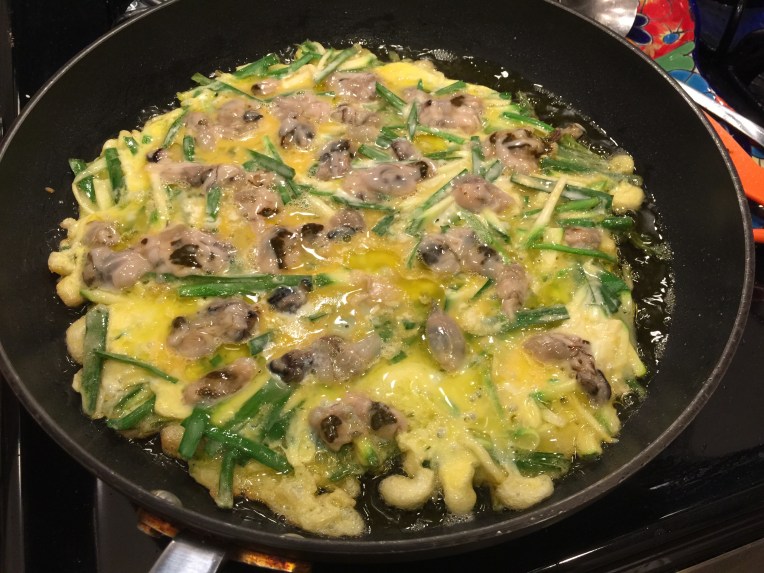
I can’t believe it myself but you’re reading it right. My title says “more vegetables please Mommy!” My daughter is an addict! She loves this recipe so much she can’t get enough and will even ask for more and not leave anything for her Dad. 

This is Maangchi’s Korean Vegetable Pancake recipe called Buchujeon in Korean. You can see her recipe at her website but as always, I give my version a personal touch. 

Here’s what I do: 

INGREDIENTS: 

Small Korean Zucchini (or italian zucchini) 

5-8 Stalks of Green Onions 

1 Korean Chili (I use this because it’s not hot/spicy – good for kid-friendly recipes) 

1 Egg 

 A piece of small Carrot 

3 Garlic cloves 

Fresh Oysters (optional: or shrimp and try scallops) 

Chop and julienne the carrots and zucchini. Add in the thinly chopped green onions and korean chili. In a separate bowl, mix in 1/2 cup flour, salt and 2/3 cup water or sometimes I use a store-bought korean vegetable pancake mix and follow the package instructions. 

Chopped vegetables should be around 3 cups. Mix the vegetables with the batter and mix it up with your hands to spread evenly.Chop 3-6 pieces of fresh oysters and set aside. 

In a big heated non-stick pan, put some olive oil and spread the vegetable pancake mixture. Put your heat to medium. Top the raw side of the cooking pancake with fresh oysters and one beaten egg. Wait about 5-8 minutes before flipping the pancake. 

After 8 minutes, flip the pancake and add more olive oil (if needed) to make it crunchy (a cooking tip from Maangchi). Press the pancake down with a spatula and check once in a while to see if it’s getting cooked the way you want it to be. 

My secret dipping sauce that really makes my daughter eat this pancake a lot is a mixture of 1/4 cup rice vinegar, 2 tablespoon of light soy sauce and a pack of splenda. You can use sugar if you want but I don’t have that in my pantry 🙂 

Use other vegetables if you want to explore it! I’ve tried, sweet potato with green onions, chives and red peppers, I even tried bean sprouts with oysters as suggested by my husband. 

Enjoy and let me know about your version!

Lady Liberty from Ellis Island

Inside Ellis Island immigration building, I took this photo during our short trip to visit my husband’s brother and his family in New Jersey last month. Upon arrival to the island, history radiates and it seemed like we were drawn to the past specially while listening to the audio tour narrating details of what happened years ago. I think I had the same feeling when I visited the island of Corregidor in the Philippines. But that time, I was only around 8 or 9 years old. Both islands are rich in culture and history.

Using my Nikon SLR camera, I focused on getting the natural light into the immigration building while capturing a sharp image of Lady Liberty from the other island.

Friday Sickness is “Waiting” for you!

I am featuring my nephew’s high school band called FRIDAY SICKNESS. They started this band by themselves and once in a while, my nephew share some news about their new songs, their gigs and their videos. I totally support them for being so musical because I am a lover of music myself. I may not be able to understand the type of songs they write because of generation gap but this particular song I posted sounded very inspiring to me.

If you would like to know more about Friday Sickness, you can visit their Fan Page on Facebook.

The following are the band members:

Vocalist – Angelo Suni (he’s my nephew)
Rhythm Guitarist -Proibel Asi
Lead Guitarist – Jason Paala
Bassist – Cedrick Albuen
Drummer – Mark Vidses Pagaduan

If you like their song, feel free to leave a comment and that will help their band gain more attention online.  Watch out for more songs in the future!

The Art of Miso Ramen

Vodpod videos no longer available. 

more about “The Art of Miso Ramen“, posted with vodpod


I wish I can make this everyday but I feel like it’s too much work even if it’s really simple.  Making a warm bowl of miso ramen is a lot of work for me just like many of my other favorite japanese food. Because of it’s precision process, sometimes having a bowl of this from a small authentic jap restaurant is better than making your own. Here, I will share how I made this beautiful work of art so you can try your own version too.

INGREDIENTS:

  • Fresh ramen noodles
  • Some pork belly
  • 4-5 cups water
  • 2-4 tablespoons miso paste (depending on taste and kind you like, I use white miso)
  • 2-4 teaspoons chili oil
  • 1/2 teaspoon hondashi
  • hard boiledeggs  and sweet corn kernels
  • Narutomaki(fish cake with pink swirl)
  • 1 stalk green onion (finely chopped)
  • 1 tablespoon white sesame seeds (pounded until fine)
  • Light soy sauce to taste (optional)
  • Seasoned laver/seaweed (cut into strips)

METHOD:

Bring water to boil with the cleaned whole piece of pork. Let it simmer for a while then remove the pork and skim remaining stock. Add in the miso paste, hondashi, eggs and sesame seeds. Bring the soup base to boil. Add in the chili oil and light soy sauce to taste (optional). Blanch the fresh noodles in a pot of boiling water until they are cooked. Rinse with cold water, drain and set aside. I rub the noodles with a little bit if vegetable oil to keep it moist. In a serving bowl, add the noodles then top with the hard-boiled egg, sliced pork, narutomaki, corn kernels and chopped green onions. Pour the miso soup base into the bowl and add the roasted seaweed to top then serve immediately. Look at my photo gallery to be inspired and get hungry!

Note: I added preserved bamboo shoots to my soup because my favorite bowl of ramen from a japanese ramen restaurant serves theirs with some.

Doyd’s Spicy Mackerel Stew


2 Medium size fresh Mackerel (cleaned and cut into 2-3 inch pieces, remove head)

1 Medium size Korean Radish cut into 2×1 inch cubes

1 whole medium Onion

3 stalks of Green Onion

2 Korean Hot Pepper

7-10 Dried Anchovies

2-3 cups of water (depending on how much sauce you want)

For the Spicy Sauce, mix the following into a bowl:

2 Tablespoons of  Red Pepper Paste

2 Tablespoons of Light soy sauce

2 Tablespoons of  Cooking Wine (I use Japanese cooking wine)

1 Tablespoon Red Pepper Powder (same one used to make kimchi)

2 Teaspoons of Sugar

5-7 cloves of minced Garlic

1/2 Teaspoon minced Ginger

In a ceramic pot, let the water boil with the dried anchovies and wait 5 minutes then remove the anchovies.  While the stock is boiling, add the radish.  On top of the radish, arrange the mackerel pieces.

Pour the sauce on top of the mackerel.  DO NOT MIX.  Let it boil until the soup is reduced.   Occasionally pour the stew’s broth over the fish and radish.

Add the onion, green onions and korean chili on top of the stew.  Continue to pour the broth of the stew on top of everything until the mackerel is well-cooked and the flavor has sipped into all the vegetables.

My husband and I love this dish a lot.  I do not cook mackerel before but now, I do.  I learned this recipe from a restaurant where I first tasted this stew.

Hope you all enjoy cooking your own version.  It’s really easy 🙂

Tasty, yummy and rich Spicy Mackerel Stew.

Wilderness


wilderness

Originally uploaded by doyd74

Today my sister left Irvine to go back and be with her family in Manila. This picture was taken by me during our short trip to Palm Springs. I wanted to show a special shot of the wilderness and I think this one did the job. I like it that she was looking around enjoying the serene beauty of nature that day. As my sister says, “this is God showing me the beauty of His creations.”